A New Lexicon for Health
There is a need to introduce a more ecological and systemic lexicon to public health. Ecology is defined as the relationship between organisms and their environment. An ecological approach to public health would examine the interaction of multiple elements that affect a person’s health as part of a connected ecosystem which includes the places a person inhabits and their experiences within them. Thirdly, to learn more about the relationship between people and health, our lab has concentrated its studies on the Hypothalamic- Pituitary- Adrenal- Axis (HPA-Axis), which is one of the main systems that mitigates the stress response.
With this framing we can understand health through various lenses such as climate change, social/racial injustice, environment degradation, and poverty.
In doing so we can create a more accurate framing of health that can bring about health and environmental justice to communities that have been structurally marginalised. Additionally, an ecological framing could allow for innovation in preventive health, healing our environments is a key pillar in elevating health.

Psycho-Social Factors of Stress
Our body does not only suffer chronic stress due to pollutants. Psychosocial factors also play a part in our long-term health. The psychosocial relationship to health is a widely investigated field. We refer to two areas of investigation relevant to our work.

What is Thermal Pollution?
Thermal pollution is going to be a factor of increased importance due to climate change as it encompasses everything from region down to the density of buildings and even further to the materiality of the environment.

What is Light Pollution?
Light disrupts the circadian rhythms of humans and wildlife alike as well as lowering melatonin production, which results in sleep deprivation, fatigue, headaches, stress, anxiety, and other health problems.

What is Noise Pollution
Noise pollution is a pollutant that is manageable in moderation. People specifically experience the negative health outcomes of noise when it disrupts their sleep and ability to recover or focus.
What is Air Pollution
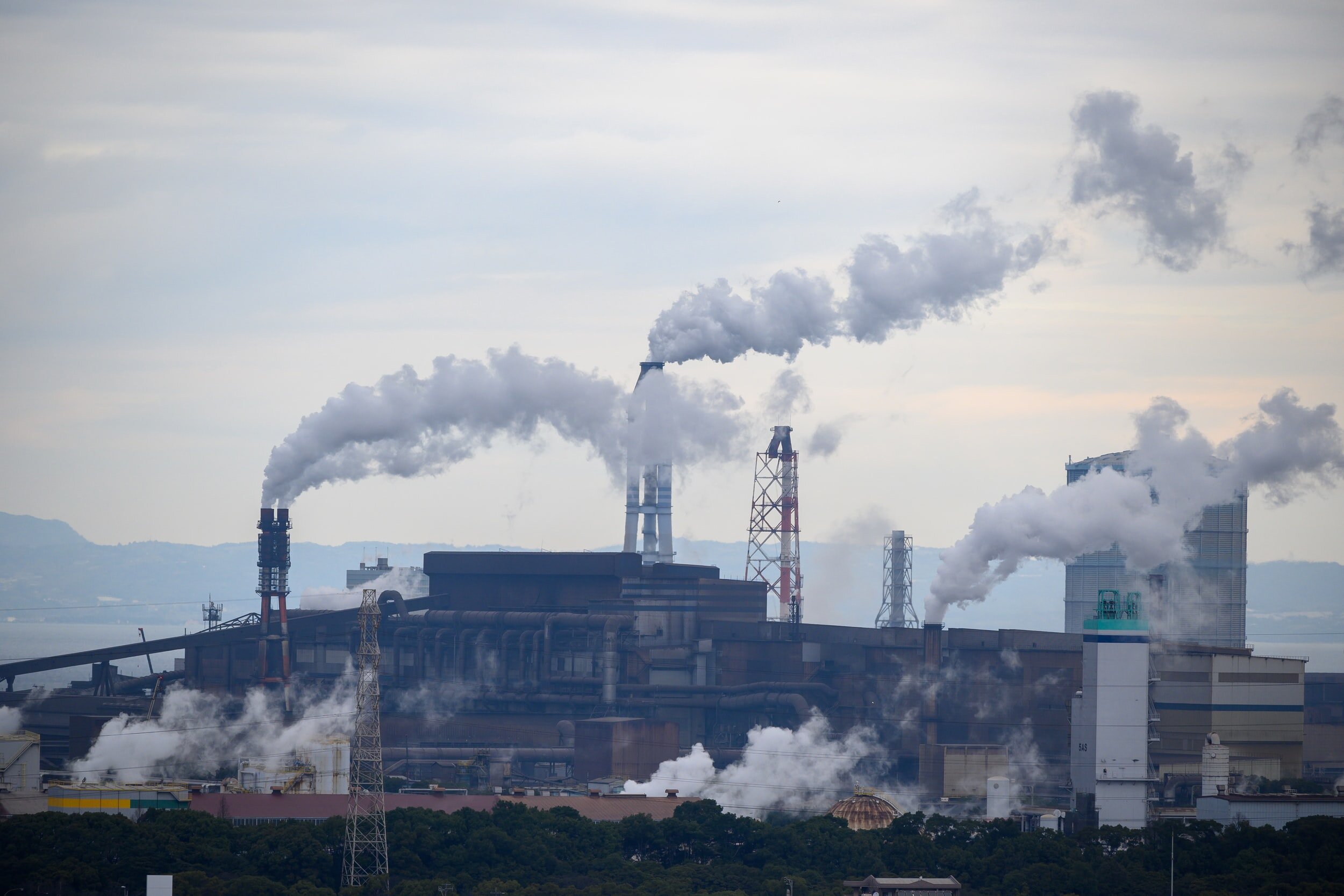
Air pollution presents a particularly insidious hazard given that the disease affects respiratory and cardio-vascular systems. These two systems are sensitive to air pollution as air pollution directly damages the mechanics and as a consequence the function of lungs, heart, and the circulatory system.

Health Effects of Climate Change
Climate change is the greatest challenge facing society today. The trends of pollution, in particular air pollution, have been steadily growing in the last few decades and have reached record highs.

Lessons from Covid-19
The recent COVID-19 pandemic has sent a reminder of the imminent effects of climate change in our society. It has further highlighted the fragility of the balance between humans and environment, and has clearly exposed biological inequity in our society.

The Impact of Pollution on Health
There is a large consensus in the literature that meeting a threshold for air pollution levels is sufficient to guarantee health. Indeed, the World Health Organization (WHO) has set out specific thresholds for acceptable levels of pollution, which are used by governments across the world as golden standards. However, the human body is not naturally designed to live in continuously polluted environments.

Definitions of Health
Given that climate change and pandemics are posing an immediate threat to health and are disproportionately affecting deprived communities, healthcare costs are projected to increase significantly. Thus now, more than ever, it is necessary to review our definition of health and how we apply it.

Stressors & Stress Response
A stressor is defined as a novel threatening environmental agent that alters the baseline human biological system in either of two ways: bringing the system to an unstable biological state, or slowing down the system’s internal response so that it cannot reach equilibrium.

Homeostasis vs Allostasis
Homeostasis is a long-debated concept in the field of neuroscience and immunology. The term was originally coined by Cannon, who defined it as “a condition - a condition which may vary, but which is relatively constant”. Recently, McEwen has provided a more comprehensive definition of HM, explaining it as the return to a predetermined set of physiological conditions of equilibrium of the body, following stress.

Allostasis & Disease Biomarkers
Allostasis and Allostatic Overload are states in which the system enters a dysregulated stress response. Non-communicable diseases have been shown to be associated with Allostasis.

Biological Inequity
In order to better understand why certain communities are being disproportionately affected by the incidence of non-communicable diseases, it is important to consider the environmental and psychosocial stressors that the community experiences daily. It is from these considerations that we propose a new term to describe the unequal distribution of stressors and their effects on health in our society: biological inequity.